
Riverside Resident Lookup Records
No single official record is a complete Riverside residents directory. Each custodian records a narrower fact, and a useful resident lookup keeps those facts in their proper lane. The property roll can identify an owner of record and a tax mailing address. A deed records a transfer or lien. A court index connects a party to a case. A vital certificate documents an event under California copy rules. A license or business filing shows an official affiliation, not a full home history.
| Record | What It Confirms | Where | Access |
|---|---|---|---|
| Assessor parcel roll | Owner of record, situs, mailing address, APN, and assessment facts | Riverside County Property Search or Assessor counter | Free web search; richer office terminal or microfiche access |
| Recorder documents | Grantor, grantee, recording date, document type, number, and legal description | Assessor-County Clerk-Recorder index and counter | Free index; images and copies may cost |
| Superior Court | Party name, case number, case type, filing dates, and accessible documents | Riverside Public Access or courthouse computers | Account and credits online; clerk search and copy channels remain available |
| Voter registration | A person’s own status, precinct, participation, and registration facts | California My Voter Status or an approved file request | Identity-gated personal tool; file access has statutory purposes |
| Birth, death, and marriage | A named event and related parties on an eligible copy | Riverside ACR or California Department of Public Health | Authorized and informational-copy rules apply |
| Business and professional license | Entity, agent, licensee, status, board, or public discipline clue | California bizfile and Department of Consumer Affairs | Free search; documents or board detail can differ |
| Probate | Decedent, petitioner, heirs, or interested parties when stated in public filings | Riverside Superior Court probate search or clerk file | Online cases generally July 1994 onward; older files need clerk help |
Choose the first source by the fact known. An address points toward the Assessor and GIS, a case number points toward the court register, and a family event points toward a vital custodian. A name alone needs variants and a date or role before a result can be trusted. Riverside County, the City of Riverside, the court, and California agencies each keep separate systems, so a failed search in one does not close the trail.
Separate Same-Name Riverside Residents
Same-name matching is the central risk when you look up a resident in Riverside. Search a surname with a first name, initials, former or married surname, reversed indexing, hyphen and space variants, and likely OCR errors. Riverside’s Latino, Japanese American, Chinese, Indigenous, military, citrus, and migrant histories make careful treatment of compound surnames, initials, and spelling changes especially important. That is a search method, not a claim about which names are common today.
Next, attach the candidate to a stable key. An APN or legal description can separate property owners. A case number can separate court parties. A license number, entity number, or recorded document number can separate professional or business records. A street address by itself is weaker because a number or street name can change, and a tax mailing address can belong to someone who lives elsewhere.
California’s personal voter tool is not a public name directory. A person checks their own status with identifying data, while a broader voter-file request needs an application, permitted purpose, fee, identity documents, and a security plan. The California voter-file request source lists those channels and restrictions. Participation history can show an election and method, never the ballot choice.
Compare roles and dates before adding a result to a family trail. A deed’s recording date may differ from signing, a court filing date is not a birth date, and an agent address may belong to a company. Preserve the indexed spelling and note what the record actually says. The best conclusion is a small set of matching facts from independent custodians, not a long list of untested names.
Read a Riverside Court Case Search
Riverside city trial matters belong to Riverside Superior Court. The public-access system covers different case types from different local start dates, including Riverside civil matters from October 1991, family matters almost entirely from April 1992, probate almost entirely from July 1994, felonies from January 1990, and misdemeanors from January 1994. Other branch dates vary. The Riverside court public-access portal requires an account for many searches, and its web information is a finding aid rather than the official certified record.
| Mode or field | Required | What it returns or does |
|---|---|---|
| Index, person or organization name | Name for an index search | Paid credit search that returns matching case identifiers and filing dates. |
| Case Number | Required for register, documents, or probate notes | Exact-number lookup is free and narrows the record to one case. |
| Register of Actions | Case number | Document title, filed date, and filing party. |
| Calendar | Search criteria | Current and future dates up to seven days, with time, hearing type, and department. |
| Documents | Case number | Permitted remote documents, with paid downloads where remote access is allowed. |
| Probate Notes | Case number | Notes updated in the evening three business days before a hearing, based on timely filings. |
A court result is a small record inventory, not a full life story. The public description supports these fields and views:
- Matching party or organization name, case number, and filing date from the name index.
- Case type and courthouse or branch context when the result identifies them.
- Register of Actions entries with document title, filed date, and filing party.
- Calendar entries with hearing date, time, type, and department.
- Remote-document availability when a case number and the access rule permit a download.
Insider tip. Resolve the exact case number first. Riverside’s exact-number lookup is free, while a name index search consumes paid credits. A selected name permits up to ten case views before another search, and document downloads have their own per-page charge.
Name credits range from $1 for one search to $250 for unlimited self-service name searches for 30 consecutive days. Clerk channels fill gaps: courthouse public-viewing computers can reach material not displayed remotely, and the court’s RI-MC002 search and copy form supports a name or case search, copies, certification, and offsite retrieval. The court lists $15 for a clerk name search, $0.50 per page, $40 for certification or a document, and $32 for offsite retrieval. Check the current schedule before paying.
California Vital Copies Break the Age Myth
A common resident lookup mistake is assuming California vital records become fully open after a simple age threshold. California instead separates authorized copies from informational copies. Comprehensive indexes and confidential certificate portions are restricted under Health and Safety Code sections 102230, 103525, 103526, and 103526.5. The authorized and informational-copy rule controls who may receive a certified version and what an informational copy can show.
Riverside Assessor-County Clerk-Recorder issues birth and death certificates for Riverside County events and marriage certificates when the license was issued in the county. County service supports counter, mail, and drop-box channels at the recorded office locations. A mailed authorized-copy request generally needs a sworn statement and notarization, with payment by check or money order. California Department of Public Health handles statewide applications and supplies a divorce certificate, while the Superior Court keeps the full divorce decree.
- Birth: Riverside County’s 2026 fee is $34 and the state fee is $31; an informational copy is generally available, while an authorized copy follows the statutory eligibility classes.
- Death: the 2026 fee is $26, with informational access and a defined authorized-person list.
- Public marriage: the 2026 fee is $19, with informational or authorized copies under the rule.
- Confidential marriage: the 2026 fee is $19, and a copy is limited to a party or court order, with no informational copy.
- Divorce: CDPH’s 2026 certificate fee is $18, while a court-certified decree is a separate court record and listed at $15.
Informational copies state that they are not identity documents and may redact fields or signatures. An authorized applicant may be a close relative, a court-order recipient, a qualifying attorney or agency, a government representative on official business, or an authorized representative. Choose the informational copy when it answers a family-history question, rather than requesting a more restricted certified record without checking eligibility.
Verify a Riverside Resident Across Records
Verification means testing one candidate against independent records, not collecting every mention of a name. A stable address, APN, case number, license number, entity number, or dated family event gives the search something firmer than a loose name match. Use the sequence below when an address or name needs to be anchored to the right Riverside resident.
- Normalize the name. Keep initials, former names, both surname elements, hyphen and space versions, and the exact indexed spelling.
- Anchor the candidate to a Riverside fact such as an APN, legal description, case number, license, entity, or dated vital event.
- Compare dates and roles. Separate a deed recording date from execution, a court filing from a birth date, and an owner mailing address from occupancy.
- Cross-check at least two independently maintained systems. An assessor owner and recorder grantee with the same APN are stronger together than either alone.
- Inspect a source image or order a certified copy when the distinction matters. Search snippets are finding aids, and the court says web data is not the official record.
- Write down a negative result carefully. Older coverage, protected voters, indexing variation, a recent filing, or a portal outage can all explain an empty search.
- Docket
- The court’s running record of a case, including filed items and dates. A docket is not the same as every document in the file.
- Index versus image
- An index is a finding aid with names or keys. An image is the scanned record itself, and access or copying rules can differ.
- Certified copy
- A custodian-attested copy that can carry legal weight under the rule for that record. It is not the same as a free search result.
Riverside Resident Lookup for Family Trails
A one-person search can serve a family-history question without pretending that one public record solves it. An heir trail begins with a decedent and probate file, then checks the APN, deed, obituary, and family clues. A former classmate may be easier to approach through Riverside Public Library Local History Archives, yearbooks, photographs, newspaper school coverage, or an alumni office than through current address data. A deceased former resident can be followed through an obituary, cemetery clue, probate file, final deed, and historical directory entry.
- Heir or estate: inspect public probate petitions and registers of action, then test property names against the recorder and APN. An obituary supplies context, not proof of heirship.
- Birth parent or adoption connection: use California’s official adoption and court routes. Ordinary public indexes do not bypass adoption confidentiality, and the exact Riverside-serving intermediary needs current verification.
- Former classmate: use yearbooks, local photographs, newspapers, and school or alumni contacts. A yearbook shows attendance in one year, not a present location.
- Former resident: pair a dated directory listing with deeds, Sanborn maps, permits, newspapers, obituary help, or probate rather than treating a listing as ownership.
Printed directory collections supply the historical layer, while a current Riverside city directory archive can help read the older address before a modern resident lookup begins. Keep the purpose personal and lawful, and stop when a protected record or a person’s private boundary is reached.
Business and License Names Need Context
Public affiliation records can narrow a name without proving a residence. California Secretary of State bizfile can show an entity’s name, status, jurisdiction, agent, addresses, and public filing history. Department of Consumer Affairs search can show a board, license type or number, status, issue or expiration details, and public discipline links. Its advanced search can combine up to ten license types, cities, counties, status, discipline, and public documents. A Riverside County fictitious-business-name filing can add a registrant and business address. City permits and business-tax records add another local clue.
Read each role correctly. An entity owner, corporate officer, registered agent, licensee, permit applicant, contractor, parcel owner, and person who lives at an address may be different people. An agent address can be commercial, a business address can serve many people, and a license record can show professional standing without supplying a personal address. Search by license or entity number when possible, then compare the filing date and city.
Use the free California bizfile business search for a state entity question. The resident lookup becomes stronger when a business clue agrees with a dated deed, court filing, or public local record, and weaker when it is the only match.
Riverside Custody Lookups Stay Narrow
Custody systems answer a specific operational question and should not be stretched into a general resident directory. The Riverside County Sheriff inmate system searches by booking number or name and can show a limited list such as booking number, name, date of birth, sex, and custody status. The federal Bureau of Prisons locator accepts a number or a combination of first, middle, last, race, sex, and age, with federal coverage generally beginning in 1982. A result can be stale or incomplete, so use the official agency channel for any current decision.
The federal Bureau of Prisons inmate locator source is a narrow locator, not an identity certificate. Riverside County’s sheriff search is free, but operational law-enforcement data changes often and the research record did not verify every detail field. Do not infer a person’s address, family role, or history from custody status alone.
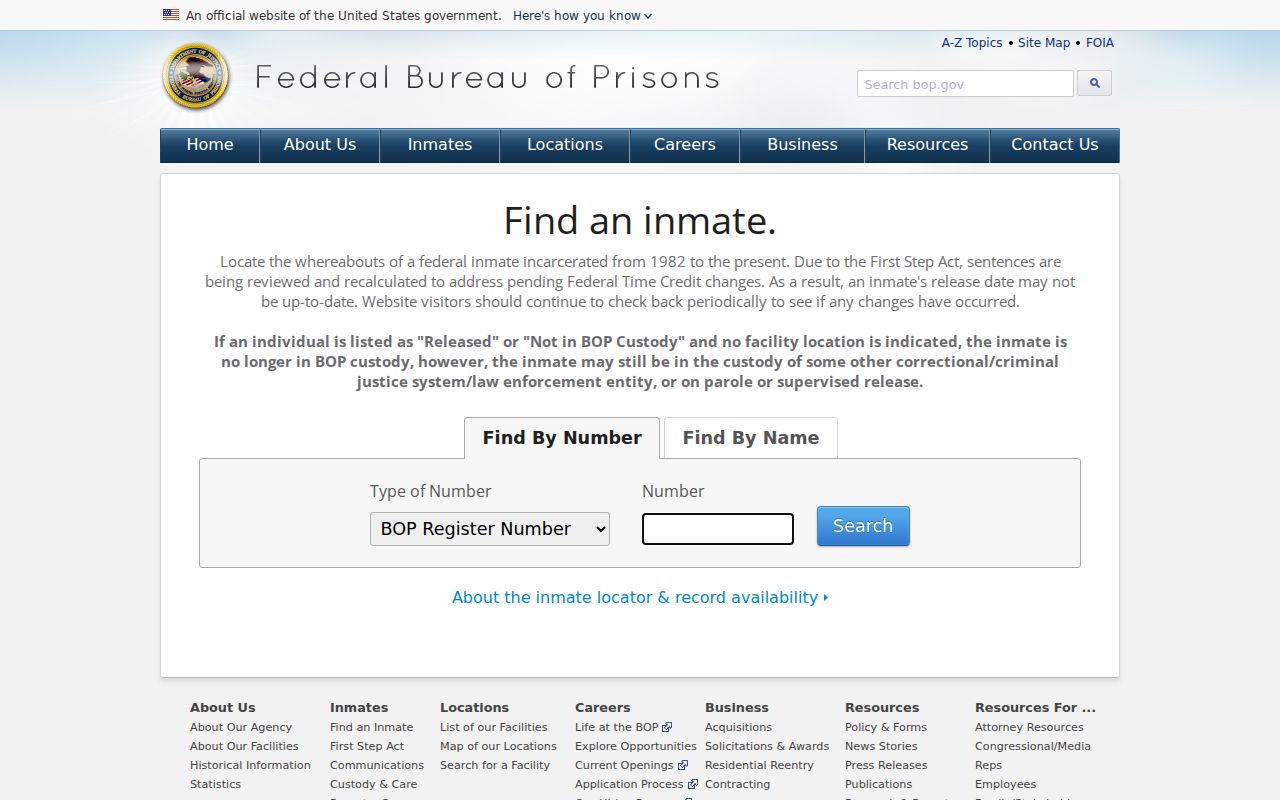
The federal locator image reinforces the right scope for this record type: use a name or custody number for a custody question, then stop when that question is answered.
Riverside Megan’s Law Data Has Limits
California’s Megan’s Law website offers an official name and map interface for a defined registry purpose. It is not a complete Riverside resident lookup, and statutory exclusions, profile limits, and use warnings matter. A registry entry should be read as the agency’s published information for that registry, not as proof of every address, relationship, occupation, or current circumstance connected to a person.
The California Megan’s Law search source is appropriate when the question is the registry itself. Use the name carefully, record the date of the search, and do not merge a registry result with a same-name property or court result without a stable identifier. Threats, surveillance, or harassment are outside lawful personal research.
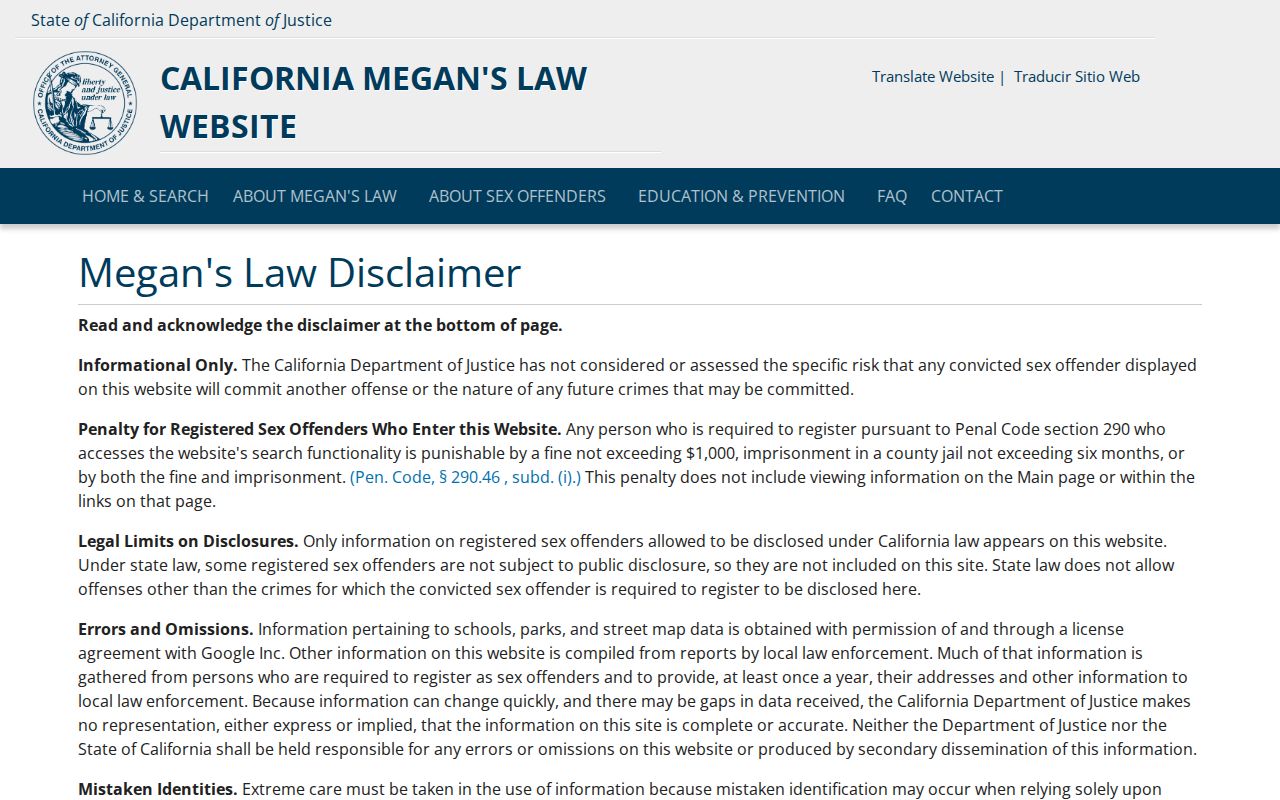
The registry image shows a specialized public-safety interface, not a broad list of people in Riverside. Its narrow purpose is the key to using the result responsibly.
Riverside Unclaimed Property Clues
California’s State Controller unclaimed-property search can be a useful family or estate lead when a name and reporting institution appear in the state record. The result may point to an older address or organization, but it does not prove that the person lives in Riverside now. A claim requires identity and ownership proof, so the search result is only a starting clue.
The California unclaimed-property search source is free to use. Search name variants, read the reporting institution and address clue, and compare the result with probate, a deed, or a known family date. Check the state site directly before paying anyone who offers to find money on a person’s behalf.
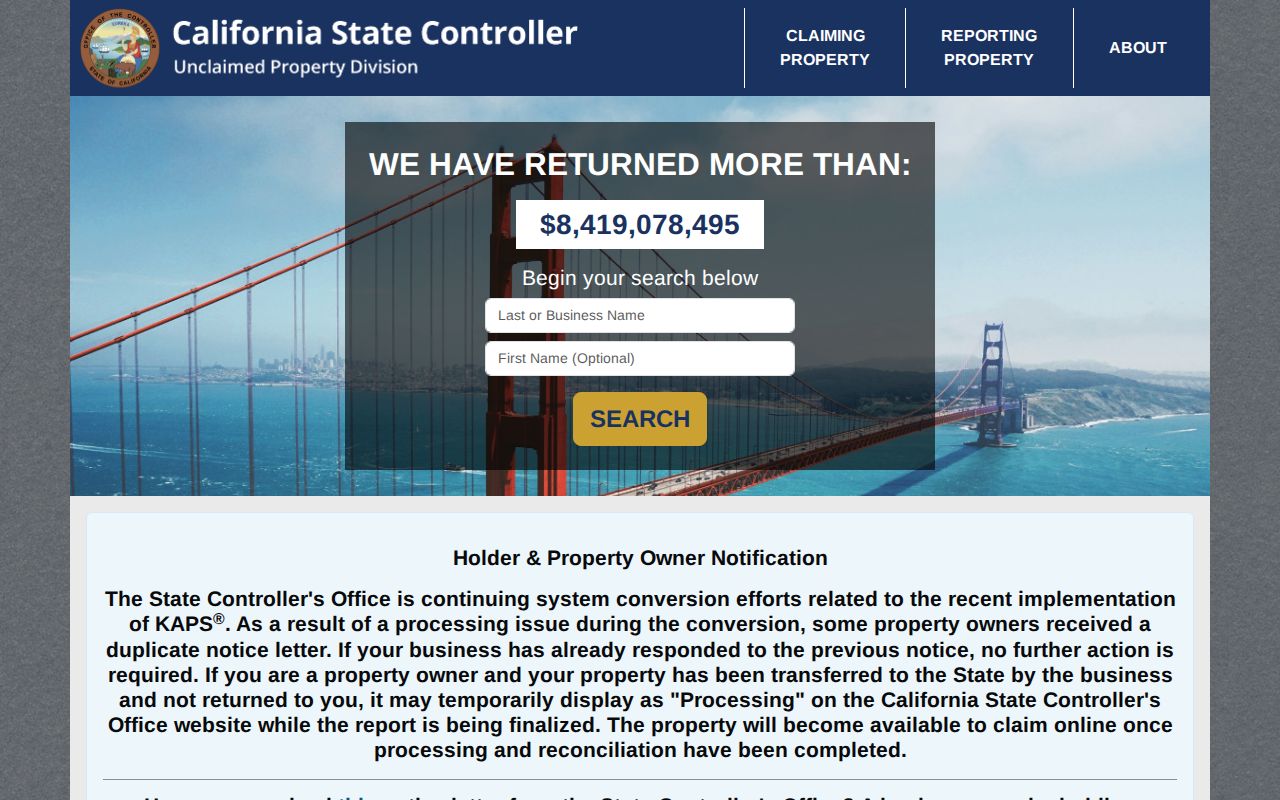
The unclaimed-property image illustrates a useful but limited name trail. It can connect a past address or institution to a family question without becoming a current-residence claim.
Privacy Gaps in a Riverside Resident Lookup
Some missing results are intentional. California Safe at Home participants may use a substitute address and confidential voting. Confidential voters and preregistrants are excluded from released voter files. Sealed court cases, juvenile and adoption records, remote family material, comprehensive vital indexes, and protected DMV residence information create other gaps. Recorded documents can also be redacted or restricted. A person’s absence from a Riverside resident lookup does not prove that the person never lived here.
The California Safe at Home source explains substitute-address and confidential-voting protections. The California Public Records Act favors access to existing, nonexempt records, but it does not override a record-specific confidentiality law. Stop when a custodian identifies a protected boundary rather than trying to reconstruct the hidden address through another person’s records.
Lawful personal use. A Riverside resident lookup is for personal, lawful research. California stalking law and civil-harassment rules do not permit threats, repeated unwanted contact, surveillance, or intimidation; never use a record to stalk, harass, or harm anyone.
Request a Riverside Record From Its Custodian
When an online resident lookup stops, ask for an existing record through the office that keeps it. Under the California Public Records Act, any person may request a public record without a prescribed form or statement of reason. The agency ordinarily determines whether the request seeks disclosable records within ten calendar days, with a possible 14-day extension for defined unusual circumstances. That is a response determination, not a promise that a copy will arrive in ten days.
- Name the custodian and record type. City Clerk, Riverside ACR, Superior Court, the Registrar of Voters, CDPH, the library, or an archives desk may each own a different piece.
- Give a date range, person or property name, address or APN, case number, and document type. Ask for an existing electronic record when one exists.
- Choose the right channel. Use a courthouse computer or RI-MC002 for court research, county counter or mail for ACR copies, an approved application for voter files, and the library or archives for historical material.
- Ask about exemptions, redactions, copying cost, certification, and appeal or correction steps. Do not ask an agency to create a new resident list or answer an open-ended research question.
A focused request is more useful than a broad name demand. Include the fact that makes the record identifiable, then preserve the custodian’s response with the search date. That practice keeps a Riverside resident lookup accurate when coverage, privacy rules, and public portals change.