
Riverside Neighbors by Public Record
An immediate block is a set of parcels, not a single government list of nearby people. Riverside County's GIS viewer supplies the visual layer. The assessor supplies ownership and assessment evidence for each selected parcel. The recorder preserves deeds, liens, and plats after a party or document search. City permits and code or land-use records show project activity. California voter-file rules are purpose-limited. The City's neighborhood registry gives public organization contacts, while historical directories show who was listed at an address in a particular edition.
| Source | What It Shows About a Block | Access |
|---|---|---|
| Map My County | Parcel shapes, address points, adjacent lots, streets, and jurisdiction context | Free visual viewer and Identify tool |
| Assessor Property Search | APN or PIN, situs address, ownership and assessment evidence | Free web route, with office computers and microfiche fallback |
| Recorder index | Deeds, liens, plats, indexed parties, dates, and document numbers | Free index; copies are paid and older material is centralized |
| City permits and code files | Work, applicant, contractor, inspections, and public land-use activity | Address-keyed city portals and department requests |
| California voter file | Residence and precinct data only through an approved access path | Personal status tool or purpose-limited application |
| Neighborhood registry | Organization names and public civic contact points | City registry; not a household roster |
| Historical directories | Dated address listings and past household clues | Libraries and archives, with year and edition limits |
Ownership is not the same as occupancy. A tax mailing address may point to a second property, trust, or PO box. A parcel record does not enumerate children, relatives, guests, or every person connected with an address. A directory listing proves that a publisher placed a name at a location during that publication cycle. Those limits keep a Riverside block lookup tied to evidence instead of assumption.
The Riverside recorder index is free to search online. Office computers reach records through 1975, while 1974 and earlier research is centralized at the Gateway office. Counter copies, mail orders, and online fulfillment are separate paid channels, so a selected parcel should be carried forward with its APN, party name, and document number.
Map Riverside Neighbors by Parcel
Map My County is the practical starting layer for the block around a Riverside address. Search the address or APN, select the suggested result, and use the viewer's parcel boundaries and address points to see which lots touch. The public workflow confirms visual adjacency. It does not verify a public radius or buffer tool, so a block must be walked by selecting the parcels that appear around the starting point.
- Enter the address or APN in Map My County, choose the matching suggestion, and select Search.
- Zoom to the parcel, turn on the visible parcel and address layers, and use Identify on the starting lot.
- Click each touching or nearby parcel, record its APN and address, and follow the assessor or recorded-map links when offered.
- Compare the parcel card with the assessor's situs and mailing fields. A matching mailing address can support owner occupancy, but it is not conclusive.
- Use the APN, party name, or document number to reach deeds and liens. Repeat the method for each selected parcel instead of treating the whole block as one record.
For a whole named street, the Riverside street directory workflow is the better handoff. The block angle stops at the immediate area and its public community layer; it does not turn visual proximity into a complete list of people.
Riverside Neighbors and Civic Contacts
The City of Riverside maintains an address-driven neighborhood lookup and a registry of neighborhood groups and organizations. The registry is useful when the goal is to reach a public meeting, learn which group serves a local area, or find a civic contact. It does not publish a verified member list. Entries renew at least every twelve months, so the registry is a contact layer rather than a resident directory.
The Riverside neighborhood organization registry is the source for the named groups below. Its captured view shows how a public organization directory differs from a list of nearby residents.
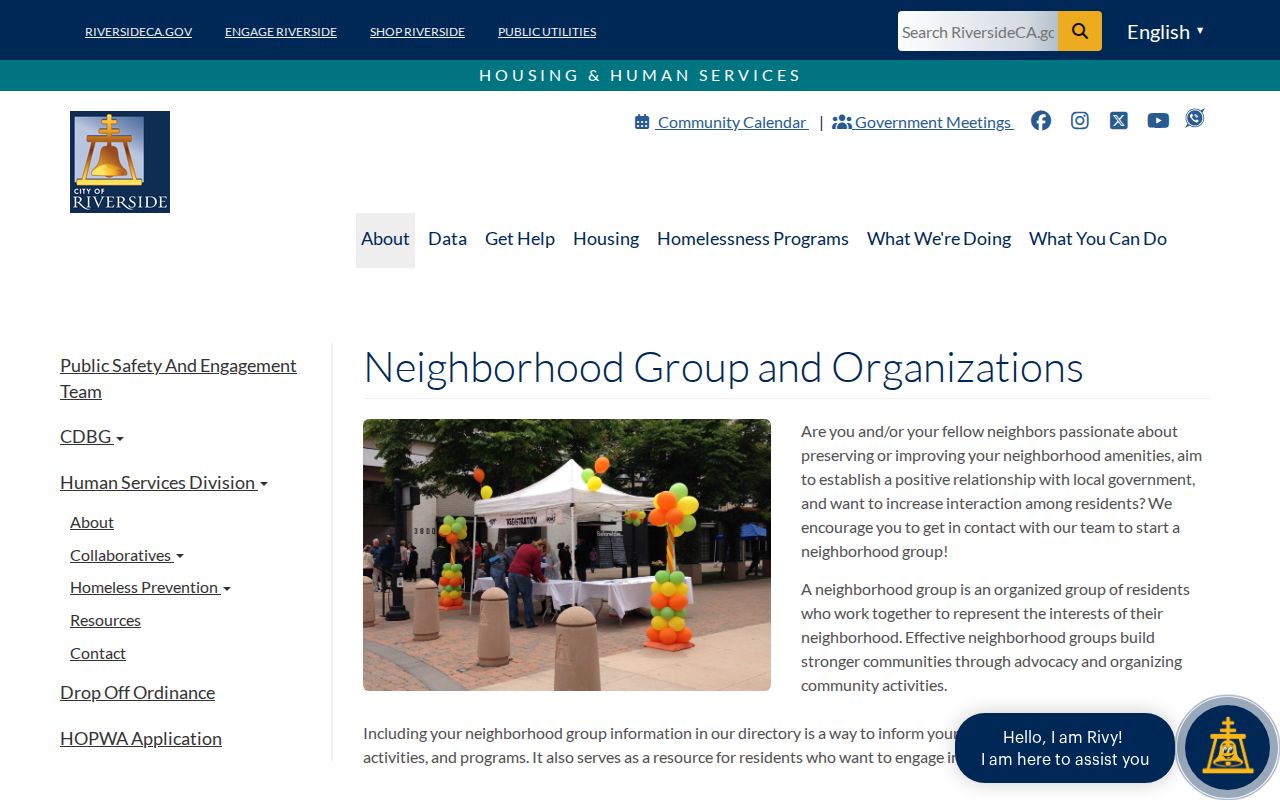
The registry image is best read as a route to civic contact. It can point a researcher toward a group without claiming that the group speaks for every parcel or household in its area.
| Public organization | Local contact value | Contact route |
|---|---|---|
| Downtown Area Neighborhood Alliance | Downtown civic connection | City neighborhood registry entry |
| Eastside Neighborhood Forum | Eastside community contact | City neighborhood registry entry |
| Historic Woods Streets Association | Historic neighborhood context | City neighborhood registry entry |
| Lincoln Park Community Group | Lincoln Park civic route | City neighborhood registry entry |
| Neighbors of the Wood Streets | Wood Streets community route | City neighborhood registry entry |
| Northside Improvement Association | Northside history and civic contact | City neighborhood registry entry |
| Orange Terrace Advisory Committee | Orange Terrace public contact | City neighborhood registry entry |
| Riverside Neighborhood Partnership | Citywide neighborhood connection | City neighborhood registry entry |
| Villegas Park and Casa Blanca Community Action Group | Casa Blanca and Villegas Park contact | City neighborhood registry entry |
Use the public contact route for a meeting or community question. Do not ask a civic group to disclose private membership or infer that an organization directory is a list of who lives next door.
Northside Neighbors Since 1912
Northside Improvement Association adds a dated civic layer to Riverside block history. The City identifies it as Riverside's oldest named neighborhood association and dates its founding to 1912. That fact helps explain why a modern block search can benefit from local history. An organization can leave a public trail through meeting contacts, neighborhood histories, or city records even when its membership is not public.
The date is a history clue, not a claim that the same families or residents remained on every Northside street. Pair civic history with parcel maps, directory editions, permits, and recorded documents. A neighborhood name can stay in use while parcels, street labels, and residents change.
Riverside Neighbors and Voter Data
California voter information does not create a casual Riverside block list. The personal My Voter Status tool requires the voter's first name, last name, full date of birth, and either a California driver's license or ID number or the last four Social Security digits. It returns that person's own registration location and status, party preference, language preference, vote-by-mail or provisional status, polling place, and election information. Users without one of the identity numbers must contact elections officials.
A broader voter-file request goes through the Secretary of State application. It asks for the applicant, beneficiary, organization, permitted purpose, requested data categories, security plan, supporting affiliation, delivery details, wet signature, government photo ID, and fee. Election, scholarly, journalistic, political, and approved government uses are listed, while commercial use is prohibited. Confidential voters and preregistrants are excluded, and asking for everyone on a street does not turn an unidentified list into a specific-voter request.
| My Voter Status field | Why it is used | Block-level limit |
|---|---|---|
| First and last name | Identity match | Not a public name directory |
| Date of birth | Identity match with month, day, and year | Not released as a casual block search |
| California DL or ID number | Conditional identity field | At least one identity number is required on the record |
| Last four of SSN | Alternative conditional identity field | Use the official form and privacy controls |
| CAPTCHA and privacy controls | Protects the personal lookup session | Close the browser after checking status |
The California My Voter Status lookup is for the individual checking their own record. The state voter-file request rules explain the separate application path.
The captured voter-file page shows why a lawful Riverside block search must respect purpose, access, and confidentiality rules. A voter record can confirm a defined registration fact when the requester is allowed to receive it. It cannot fill the gap between a parcel owner and every person at that address.
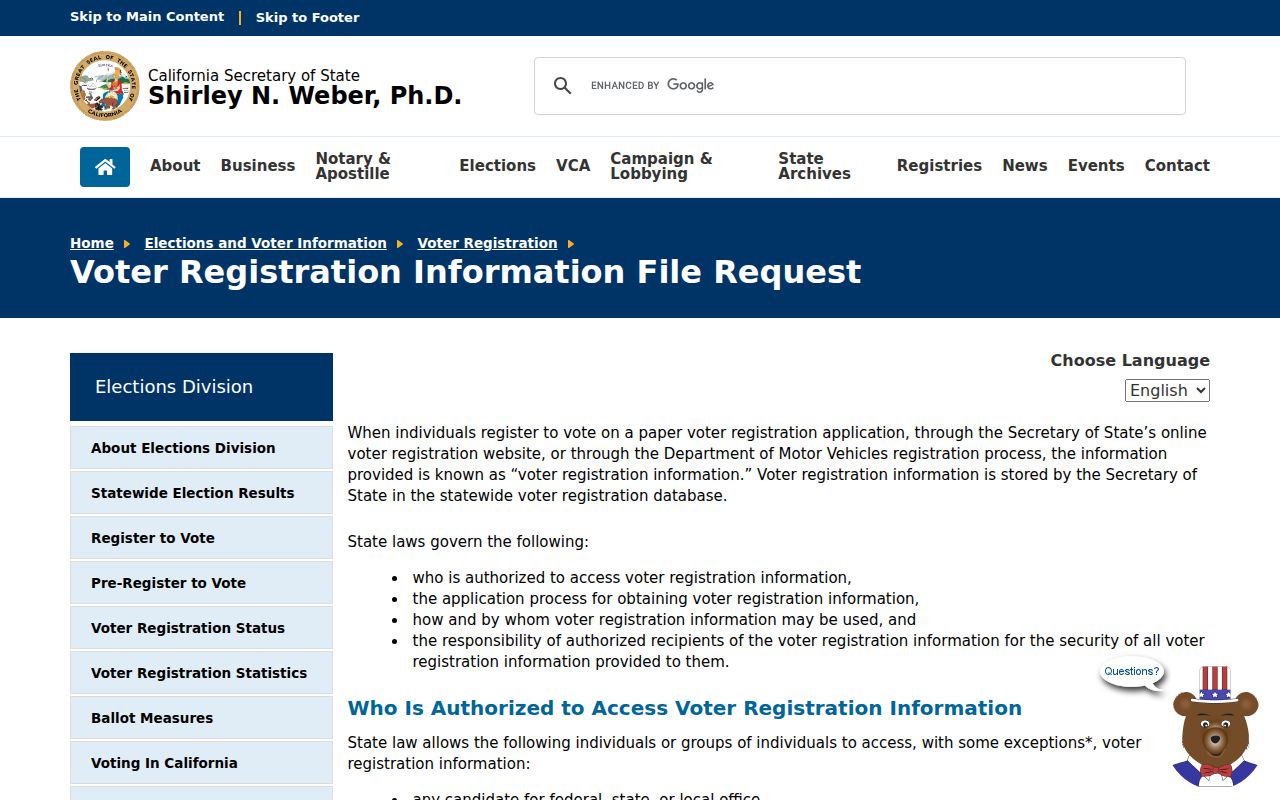
Use the image as an access reminder: the application is a controlled records channel, not a public ZIP or street roster.
Official Riverside Neighbor Records Compared
Official sources and commercially compiled neighbor tools serve different roles. A county parcel record has a named custodian and a defined field. A compiled product may join several feeds, infer connections, or present a stale match without showing the original record. The second category can suggest a lead, but it cannot replace the Riverside office, court, archive, or state agency that created the underlying record.
| Question | Official Riverside or California record | Compiled neighbor tool |
|---|---|---|
| Source trail | Named custodian, record type, and access rule | Mixed feeds may be unclear or incomplete |
| Freshness | Bound to a filing, update cycle, or publication date | May merge old and new entries |
| What it can show | Parcel, filing, civic contact, or dated listing | Inferred links and possible name matches |
| Best use | Verification and a focused personal or historical question | At most, a lead that needs source checking |
| Privacy boundary | Statutes, redactions, sealed files, and protected addresses apply | Terms and opt-out rules do not open a protected government record |
A record with a source, date, and stable key is easier to correct when a same-name match appears. That is especially important for Riverside, where a parcel owner, a business agent, a directory listing, and a civic contact can be different people.
Riverside Neighbors in Community Archives
UCR Special Collections supplies context that a current parcel search cannot. The collection holds more than 275 manuscript collections and 50,000 books and journals, with discovery through UC Library Search and selected material in Calisphere. Riverside-rich holdings include the Riverside Land & Irrigating Company, Avery Field photographs, Fujimoto family diaries, Japanese American collections, Kim family papers, Riverside City and County material, Press-Enterprise records, and Inlandia oral histories.
The UCR manuscript collections can add names, organizations, family papers, and neighborhood context to a dated research question. The captured collection page is a useful reminder that an archive is a request repository, not a current alumni or resident directory.
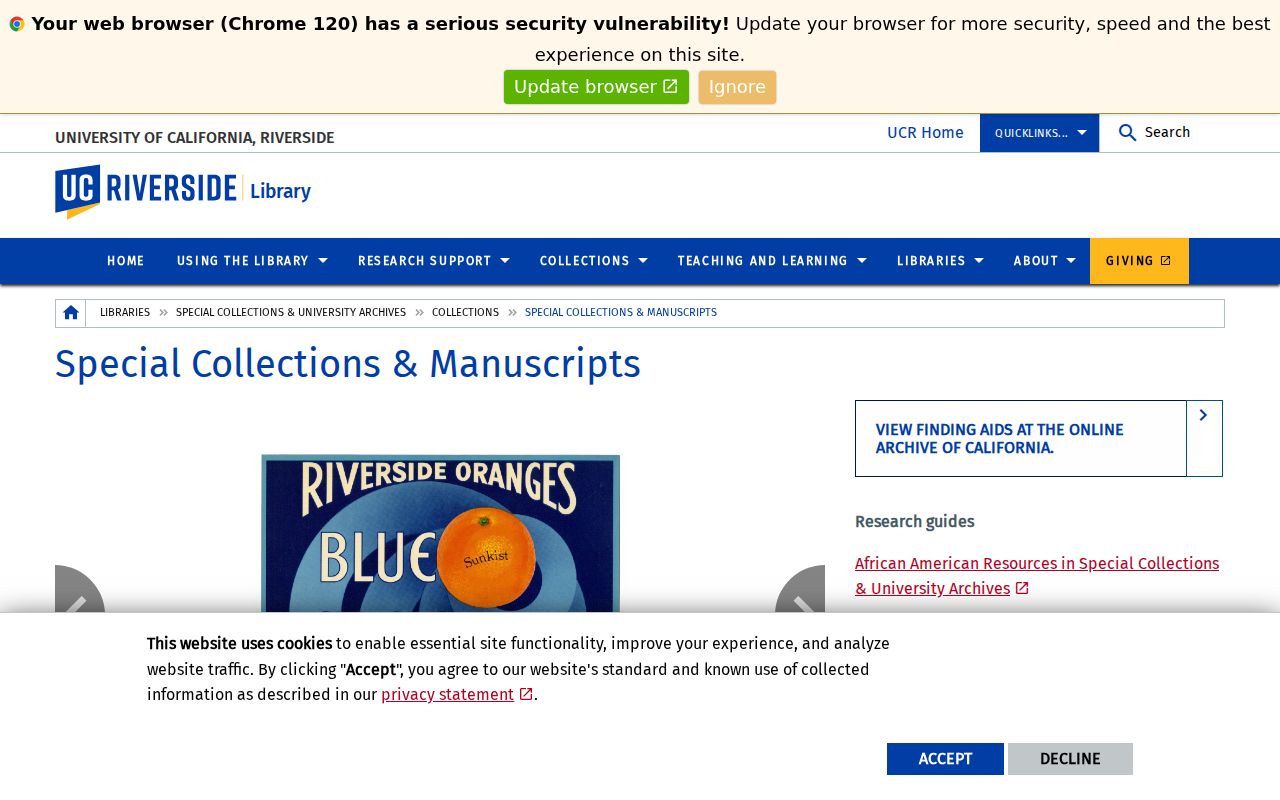
Use a manuscript finding aid to identify a collection and ask the archive about access. Do not treat a family paper or oral history as proof of every present-day connection on a block.
The People's History of the Inland Empire Digital Archive emphasizes oral histories and photographs of working people and communities that traditional collections can miss. Its captured welcome page points toward community memory, not a named current roster.
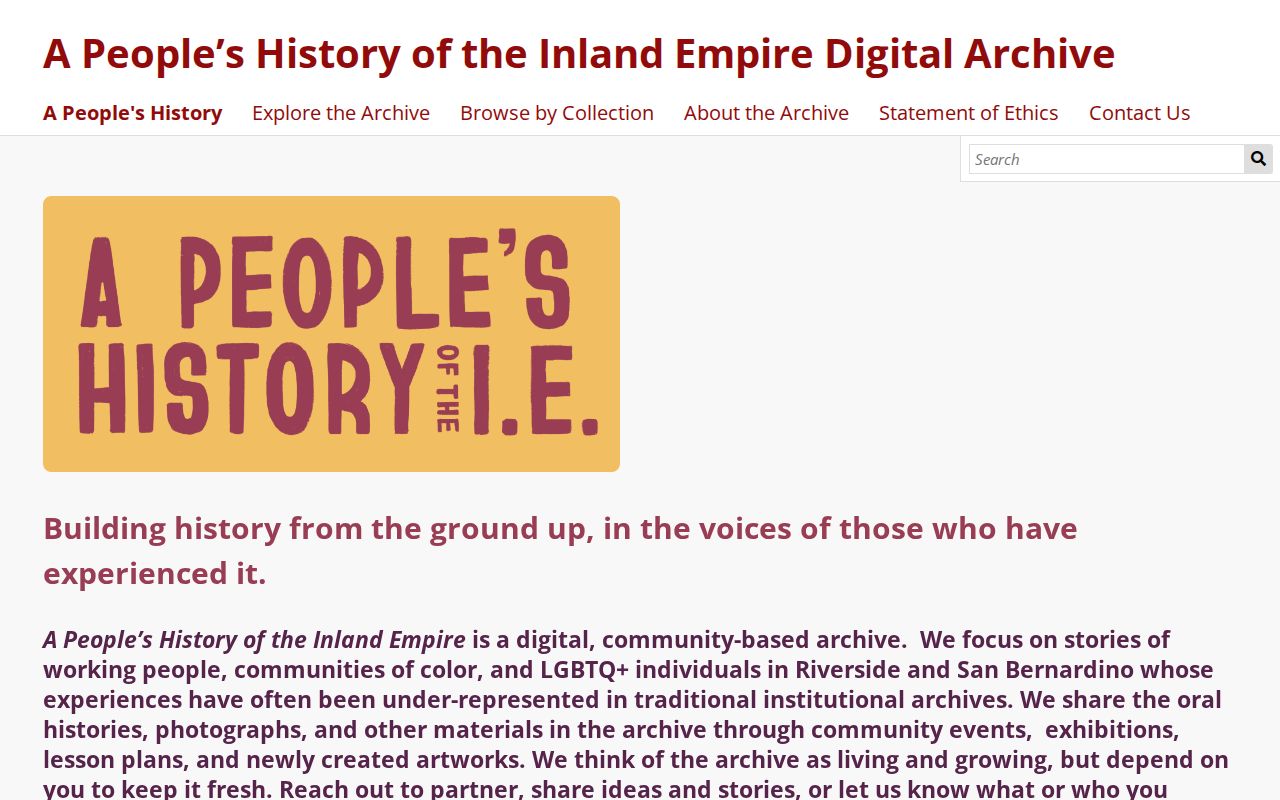
For a Riverside block-history project, that material can help explain how a street or district was lived in at a particular time. It should be paired with the date and source description that accompany the item.
Avery E. Field's photographs contain several thousand first-half-of-the-twentieth-century Riverside images, including parades, celebrations, weddings, family portraits, residences, commercial buildings, and about 1,000 Mission Inn photographs. The Avery Field collection can pair a directory address with a historical image when the finding aid and request system support that connection.
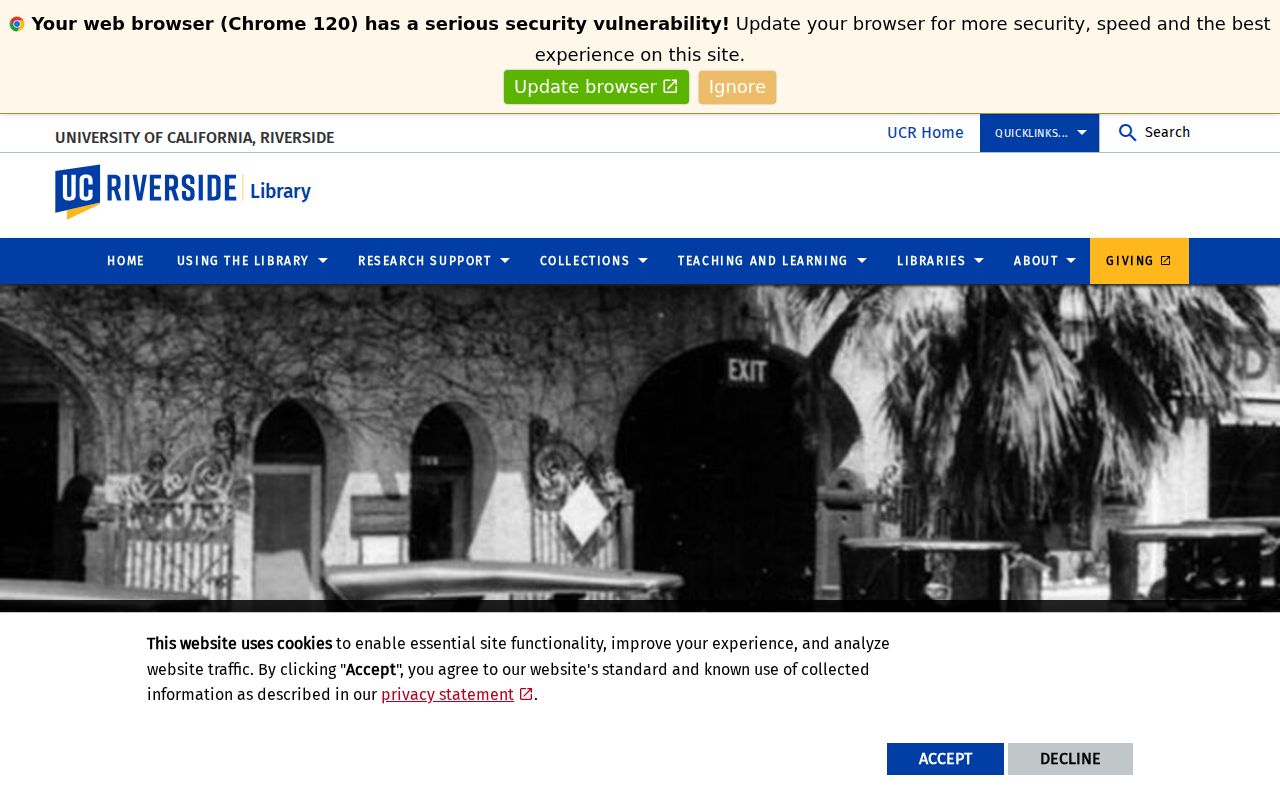
The Avery Field image layer gives a block story visual depth, but a photograph still needs its date, caption, and provenance. It is evidence of a moment, not a complete account of who lived at the address.
Riverside Neighbors in Historical Journals
The Riverside Historical Society publishes annual journals indexed for biographies and neighborhood or community histories. Research leads include Simms and Parker, Oscar and Hattie Traver, Japanese American Riverside, Casa Blanca and Evans Street, and Sumi Harada. These essays can supply names, places, and relationships that point toward a stronger archive or parcel question. They are finding aids, not current member directories.
The Society's indexed journal collection includes issue 31 from 2024 and issue 32 from 2025. The Riverside Historical Society journal index is the source route for checking the title and subject before asking for the underlying publication.
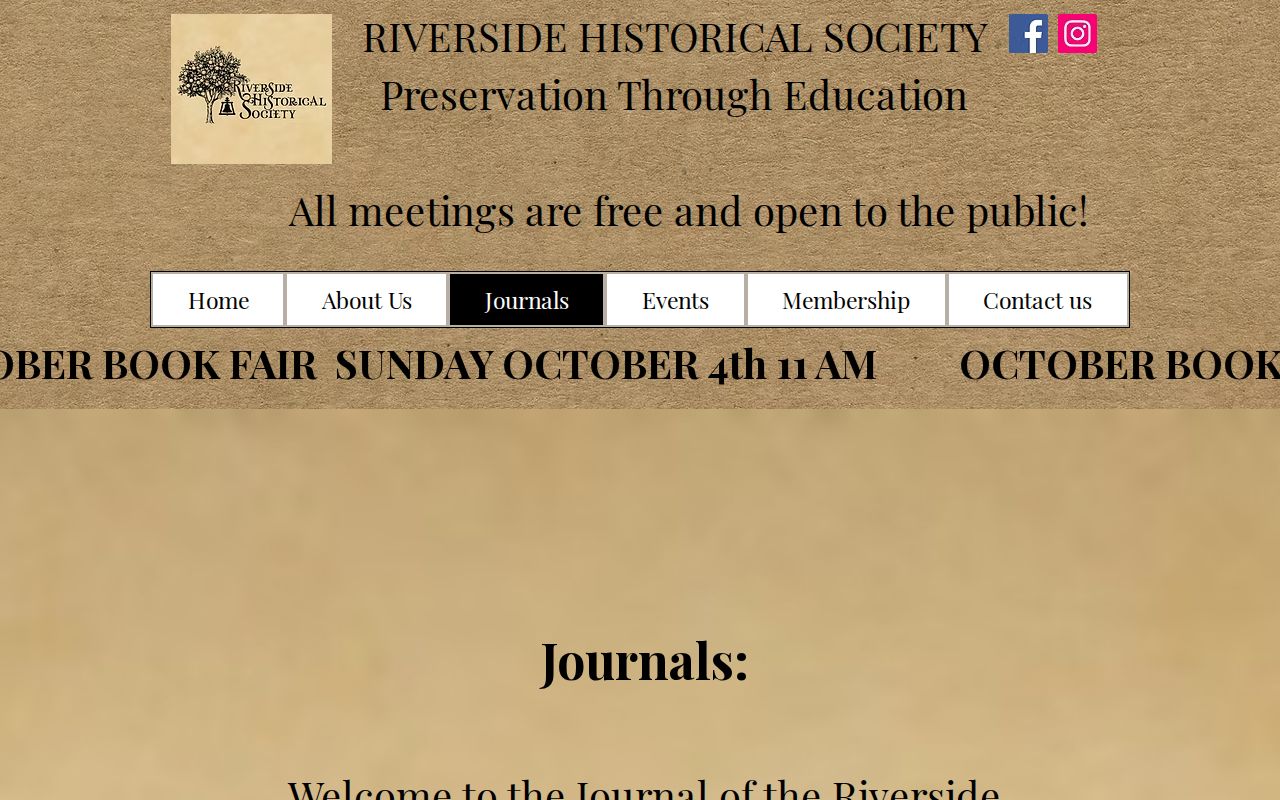
The journal image supports a simple rule for historical Riverside block-history work: use a named article and date to guide the next request, then verify the person or parcel in the record held by the appropriate custodian.
Privacy Limits for Riverside Neighbors
A parcel owner is not every person next door. California protects confidential voters and Safe at Home participants, and the Driver's Privacy Protection Act restricts DMV residence information. Sealed court files, juvenile matters, adoption records, and protected vital information can also leave an intentional gap. Utilities, delivery accounts, and private household relationships are not public substitutes. A missing name may mean the record is protected, out of range, not indexed, or simply created for another purpose.
- Parcel
- A mapped piece of land identified by county systems and an APN.
- APN
- Assessor's Parcel Number, a stable property key for joining parcel records.
- Situs address
- The physical location of the parcel, not a list of its occupants.
- Mailing address
- Where an owner or notice recipient receives correspondence, which may differ from the situs.
- Household roster
- A complete list of people at an address, which the public parcel and civic records do not provide.
Lawful use. Riverside block research is for personal safety awareness, reconnecting, genealogy, property history, and civic participation. California Penal Code section 646.9 and civil-harassment rules do not permit threats, surveillance, stalking, or intimidation. Stop when a source is protected and use the custodian's lawful correction or request channel.
The public neighborhood registry is a contact directory for organizations, not a household roster. That distinction is central to a careful Riverside block lookup. Use the parcel map to understand space, the named office to verify a record, and the archive to understand time. Do not turn proximity into a claim about a living person.